Running an online store often feels straightforward in the beginning. Orders come in, payments land in your bank, and sales dashboards look healthy. At that stage, most sellers focus on marketing, product sourcing, and fulfillment, not on numbers. But after a few months, confusion sets in. Advertising costs rise, refunds increase, inventory eats cash, and tax bills appear without warning. Even though sales keep growing, the business somehow feels tighter on money.
This is where ecommerce accounting becomes essential. It goes beyond tracking sales and shows what actually happens to your money after platform fees, payment charges, shipping costs, returns, and taxes are taken into account. Ecommerce accounting helps online sellers understand their real profit, not just revenue, and highlights problems early before they turn into serious cash flow issues.
Without proper ecommerce accounting, many online sellers rely on bank balances or platform dashboards to judge performance. That approach is risky. It hides rising costs, masks poor margins, and delays important decisions. With clear ecommerce accounting in place, sellers gain visibility, control, and confidence. They can plan inventory better, price products correctly, prepare for taxes calmly, and grow without guessing.
What Is Ecommerce Accounting?
Ecommerce accounting is the process of tracking, recording, and understanding all financial activity within an online store. It covers everything that affects money coming in and money going out, including product sales, platform fees, payment charges, advertising costs, inventory purchases, refunds, and taxes. The purpose of ecommerce accounting is to reflect how the business truly performs, not just how much it sells.
Unlike traditional accounting, ecommerce accounting handles a high volume of small, frequent transactions across multiple sales platforms such as online stores and marketplaces. Each sale may involve different fees, tax rules, and settlement delays, which makes manual tracking unreliable. Because money moves constantly, ecommerce accounting focuses on accuracy, timing, and visibility.
At its core, ecommerce accounting gives online sellers a clear financial picture. It shows whether the business is profitable, where money is being lost, and how cash flows through the operation. With proper ecommerce accounting, sellers can make smarter pricing decisions, manage inventory with confidence, and plan growth based on real numbers instead of assumptions.
Why Ecommerce Accounting Matters for Online Sellers
Many online sellers assume that strong sales automatically mean a healthy business. In reality, this assumption often leads to serious problems. High sales can hide poor margins, rising costs, and weak cash flow. Ecommerce accounting matters because it clearly separates revenue from profit and shows where money is actually going after every expense is counted.
Platform fees, payment processing charges, refunds, advertising spend, and shipping costs slowly eat into profits. When these costs are not tracked properly, they remain invisible in day-to-day operations. Sellers continue to scale, believing they are growing, while their margins quietly shrink. By the time cash runs low or tax deadlines arrive, the damage is already done.
Ecommerce accounting brings clarity and control. It helps online sellers spot problems early, understand true profitability, and make informed decisions about pricing, marketing, and inventory. With accurate ecommerce accounting, growth becomes intentional rather than risky, allowing sellers to plan ahead with confidence instead of reacting to financial surprises.
Key Parts of Ecommerce Accounting
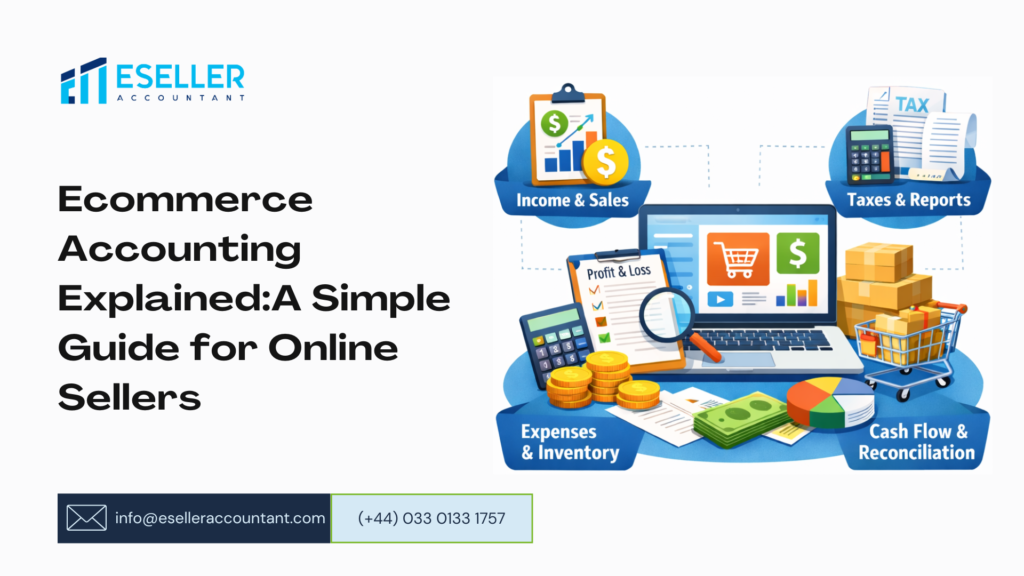
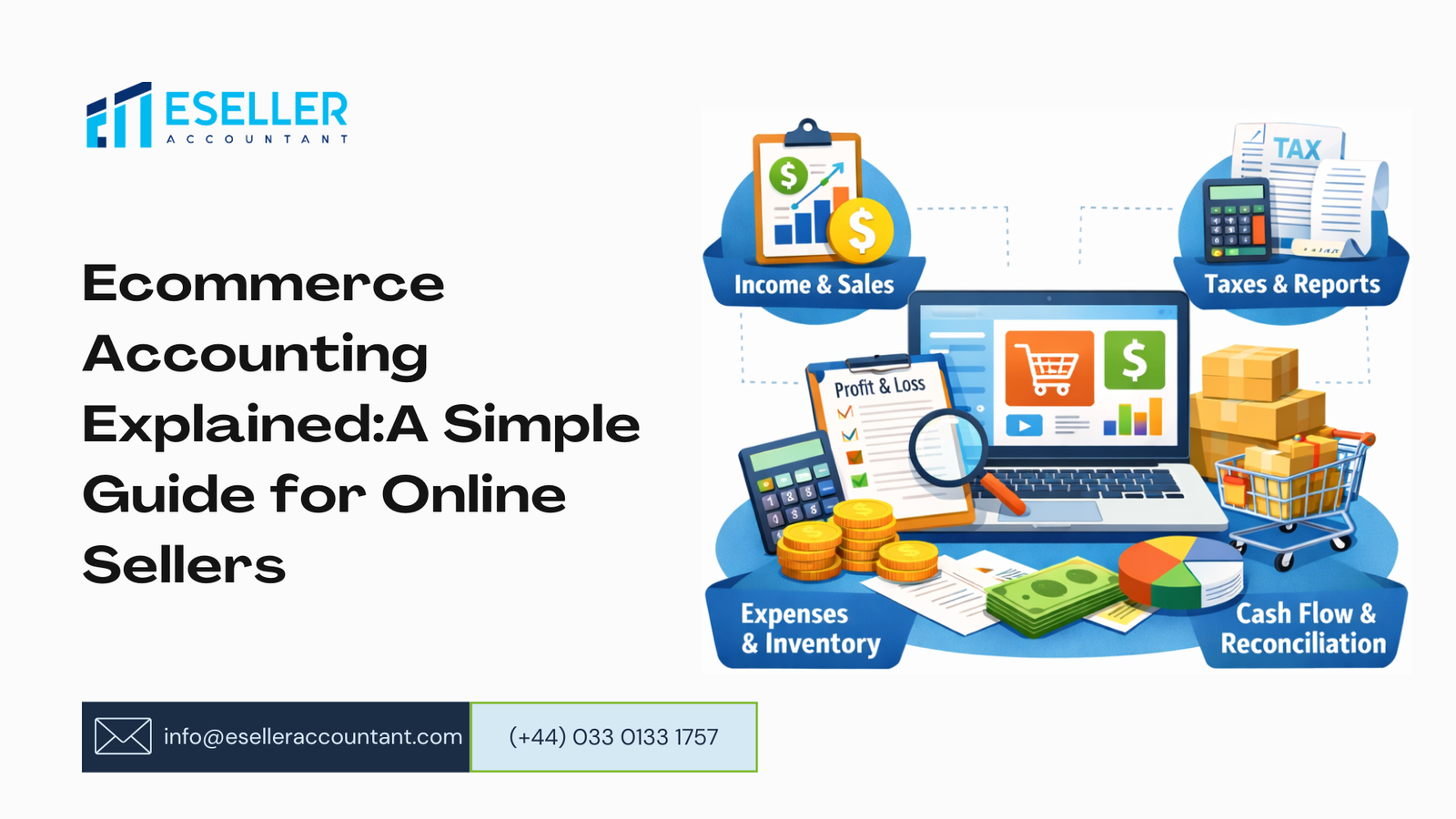
Ecommerce accounting works by bringing together every financial moving part of an online business into one clear view. It starts with tracking sales across all platforms where products are sold, including online stores and marketplaces. Because each platform reports sales differently, ecommerce accounting ensures that revenue is recorded consistently and accurately, avoiding gaps or double counting.
Another critical part of ecommerce accounting is recording transaction fees charged by marketplaces and payment providers. These fees may seem small on individual orders, but over time they have a major impact on profitability. Ecommerce accounting also adjusts revenue for refunds, returns, and chargebacks so that reported income reflects what the business actually keeps, not what customers initially paid.
Cost of goods sold is equally important. This shows what products truly cost to make or purchase, including manufacturing or supplier costs. Alongside this, inventory tracking reveals how much cash is tied up in stock and how inventory levels change over time. Finally, ecommerce accounting tracks taxes such as VAT or sales tax, helping sellers understand what they owe well before deadlines arrive. Together, these parts create a clear and reliable financial picture that supports better decision-making.
Ecommerce Accounting vs Traditional Accounting
Traditional accounting systems were designed for businesses with limited transactions and predictable billing cycles, such as monthly invoices or fixed service fees. These systems work well for offline or service-based businesses, but ecommerce businesses operate in a very different environment. Online stores process sales daily and often hourly, with transactions coming from multiple platforms at the same time.
Each ecommerce sale can include platform fees, payment processing charges, discounts, refunds, and tax rules that vary by customer location. Traditional accounting methods struggle to capture this level of detail accurately and consistently. As a result, reports may look complete on the surface while hiding important issues underneath.
Ecommerce accounting is built to handle this complexity. It is designed to manage high transaction volumes, multiple sales channels, frequent cash movement, and changing tax rules. Using traditional accounting approaches for an ecommerce business often leads to gaps, errors, and misleading reports, which ultimately harm decision-making and slow growth.
Common Ecommerce Accounting Mistakes
Most ecommerce accounting problems start with small mistakes made early in the business. Many online sellers mix personal and business money, which quickly makes financial tracking confusing and unreliable. When transactions are blended together, it becomes difficult to understand true business performance or prepare accurate reports.
Another common mistake is focusing only on sales totals while ignoring platform fees, payment charges, and advertising costs. These expenses slowly reduce profit but often go unnoticed because they are spread across many transactions. Inventory is also frequently guessed rather than tracked properly, which can lead to cash shortages from overbuying or missed sales due to stock running out.
Relying only on bank balances instead of proper financial reports is another risky habit. A healthy bank balance does not always mean a profitable business, especially when taxes and inventory costs are still unpaid. Over time, these mistakes compound, turning what could have been simple ecommerce accounting into a stressful and expensive cleanup job.
Best Accounting Software for Ecommerce Businesses
Choosing the right software plays a major role in ecommerce accounting success. The best accounting software for ecommerce businesses should connect automatically to sales platforms and payment gateways, ensuring transactions are imported accurately and consistently. This reduces manual data entry and lowers the risk of errors that can distort financial reports.
Good ecommerce accounting software also handles inventory tracking and tax calculations with minimal manual effort. Real-time updates are especially important for online sellers, as sales, refunds, and fees happen constantly. Cloud-based accounting tools are often preferred because they provide up-to-date financial information and allow sellers to access reports from anywhere.
That said, software alone does not solve accounting problems. Even the best tools fail if they are set up incorrectly or used without a clear process. Proper configuration, accurate mappings, and regular reviews matter far more than the brand name itself. When ecommerce accounting software is set up properly, it becomes a powerful tool for clarity, control, and informed decision-making.
When Should You Hire an Ecommerce Accountant?
Not every online seller needs an ecommerce accountant at the very beginning, but there comes a stage where professional support adds real value. When sales start to grow but profit feels unclear, it is often a sign that the numbers are no longer telling the full story. Inventory may begin to create cash flow pressure, taxes may feel confusing or stressful, and financial reports may stop making sense.
A skilled ecommerce accountant does far more than record transactions. They help sellers understand where money is coming from, where it is going, and why margins change over time. By identifying risks early and explaining financial data in simple terms, an ecommerce accountant helps sellers make smarter decisions, avoid costly mistakes, and grow with confidence rather than uncertainty.
Simple Ecommerce Accounting Setup for Beginners
Starting ecommerce accounting does not require complex systems or advanced knowledge. The first step is separating personal and business finances to ensure records remain clear and reliable. Once finances are separated, sellers should choose accounting software early and connect all sales channels to reduce manual work and data errors.
Inventory should be tracked accurately from the start so sellers know how much cash is tied up in stock and when reordering is needed. Financial reports should be reviewed regularly, not ignored until tax season. Simple, consistent habits create strong foundations, prevent future problems, and keep ecommerce accounting manageable as the business grows.
Final Thoughts on Ecommerce Accounting
Ecommerce accounting is not about perfection. It is about visibility and control. When online sellers understand their real profit, cash position, inventory value, and tax exposure, they gain confidence to grow sustainably. Many businesses fail not because they lack sales, but because they lack financial clarity. With proper ecommerce accounting, online sellers can stop guessing, reduce stress, and focus on building a stronger business. If expert help is needed, eSeller Accountant supports online sellers by turning confusing numbers into clear, actionable insights.
Need Help With Your Ecommerce Accounting?
If your online store is growing but the numbers feel confusing, you are not alone. Ecommerce accounting becomes more complex as sales increase, platforms multiply, and costs add up. Waiting too long to fix it often leads to stress, cash flow problems, and costly cleanups.
eSeller Accountant helps online sellers set up, manage, and clean up ecommerce accounting the right way. Whether you need help choosing the right software, fixing messy books, or understanding your real profit, our team provides clear guidance and practical support tailored to ecommerce businesses.
If you want accurate numbers, fewer surprises, and confidence in your financial decisions, get in touch with an eSeller Accountant today. A short conversation can save you months of confusion later.